
Ventricle Assist Devices
Overview
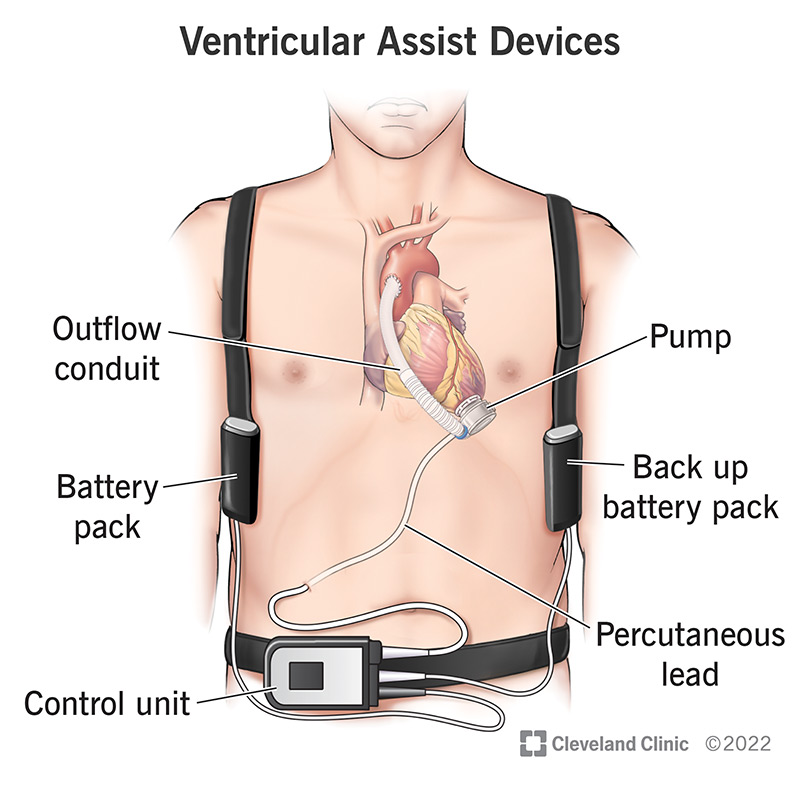
The purpose of this project is to design, development and testing processes of the new Ventricular Assist Devices (VADs) and its peripheral components: leads, controller and sensors. At the moment, we focus on the leads (or drivelines) used in the VADs and focus on their key requirements for them to operate in VAD systems successfully. In general, wired VAD systems include 4 main components:
- Blood pump
- Pump controller
- Sensors
- Driveline
Developing biocompatible and durable drivelines
The percutaneous drivelines serve as a biomaterial interface between the exterior component (controller) and the blood pump, transmitting signals and power for wired ventricular assist devices (VADs). For long-term support, the mechanical design of drivelines plays a key role in preventing driveline infections (DLIs) and VAD system malfunctions. We developed a framework that combines experimental data with mathematical modeling to analyze the mechanical response of VAD drivelines. We used HeartMate 3 and HVAD drivelines for examination and revealed the most important parameters to achieve better drivelines.
To find out more about improving mechanical features of drivelines for less infections, please take a glance at our paper in International Journal of Mechanics and Materials in Design: